31 Agtech startups in the UK (free list)
Track funded agtech companies, founders and investors across the UK startup ecosystem.
 Updated daily by John-Pierre ClarkUpdated daily by John-Pierre Clark
| Date | Startup | Funding | Round | Sector | Location | Connect | Website | Investor1 | Investor2 | Investor3 | Investor4 | Investor5 | Founder(s) |
|---|---|---|---|---|---|---|---|---|---|---|---|---|---|
8 Jul 2026 |  Dogtooth Technologies Dogtooth Technologies makes autonomous robotic harvesting systems that use ... | £14,000,000 | |||||||||||
6 May 2026 |  SugaROx SugaROx's product is a trehalose-6-phosphate biostimulant with a delivery t... | £2,500,000 | |||||||||||
8 Apr 2026 |  Fieldwork Robotics Fieldwork Robotics makes modular, autonomous robots that selectively pick r... | £2,200,000 | |||||||||||
7 Apr 2026 |  Fermtech Koji Cocoa™ is a cocoa alternative ingredient made from fermented cocoa she... | £2,500,000 | |||||||||||
13 Mar 2026 |  Tropic Tropic supplies commercial gene-edited banana and rice crop varieties for a... | £78,590,000 US$105,000,000 | Norwich  | ||||||||||
9 Mar 2026 |  Cytotrait MOSS is a platform that engineers traits directly in chloroplasts and mitoc... | £3,000,000 | |||||||||||
5 Mar 2026 |  ALORA ALORA develops gene-edited crop traits that shift plant resources from stre... | Norwich | |||||||||||
3 Mar 2026 |  Bindbridge BRIDGE is a computational platform that designs molecular glues for crop pr... | £2,800,000 | |||||||||||
17 Feb 2026 |  The Bland Company The Bland Company produces functional proteins from agricultural side strea... | £2,000,000 | |||||||||||
3 Feb 2026 |  SmartyPlants SmartyPlants makes a smart sensor system and companion app for monitoring h... | £190,000 | |||||||||||
7 Jan 2026 |  Biographica Biographica provides an AI platform that identifies candidate genes linked ... | £7,000,000 | |||||||||||
17 Nov 2025 |  farmdrive farmdrive is a livestock data tool with a mobile app for farmers and an ent... | £1,000,000 | Ballymena | ||||||||||
23 Oct 2025 |  UPP UPP produces vegetarian protein and fibre ingredients and supplies a roboti... | £1,500,000 | Newport | ||||||||||
16 Oct 2025 | 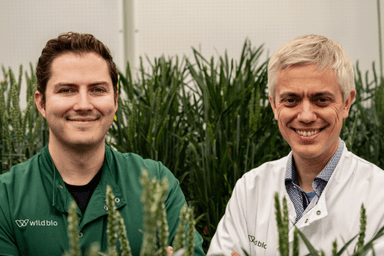 Wild Bioscience Wild Bioscience provides a data-driven platform using AI and precision bree... | £45,000,000 | |||||||||||
6 Oct 2025 |  James Hutton Institute A high-throughput plant phenotyping facility at the James Hutton Institute.... | £3,000,000 | Dundee | ||||||||||
16 Sept 2025 |  Messium Messium provides a satellite platform that uses hyperspectral data and crop... | £3,300,000 | |||||||||||
7 May 2025 |  Gardin Gardin secures £3,370,000 to enhance crop monitoring with AI tech. A game-c... | £3,370,000 US$4,500,000 | |||||||||||
18 Apr 2025 |  Fotenix Fotenix raises £2.1M, unlocking UK innovation funds to enhance crop health ... | £2,100,000 | Salford | ||||||||||
17 Jul 2024 |  GrowUp London-based vertical farming company GrowUp secures £38M investment from G... | £38,000,000 | |||||||||||
15 May 2024 |  AfriDex AgriDex secures $5 million in funding to revolutionize agricultural transac... | US$5,000,000 | |||||||||||
17 Oct 2023 |  Beta Bugs Edinburgh insect genetics company, Beta Bugs, secures £1.72M funding to exp... | £1,720,000 | |||||||||||
11 Apr 2023 |  Solasta Bio SOLASTA Bio hails a new era in agriculture, securing £4M in pre-Series A fu... | £4,000,000 | |||||||||||
4 Apr 2023 |  greenworkx Starting a green career just got easier: greenworkx secures £600k funding t... | £600,000 | |||||||||||
23 Feb 2023 |  Sprout Sprout is shaking up the investment world by securing $1 million in Pre-See... | US$1,000,000 | |||||||||||
26 Jan 2023 |  upp Upp secures £500K to transform broccoli protein harvesting with groundbreak... | £500 | Newport | ||||||||||
13 Dec 2022 |  Green Bioactives | £2,600,000 | |||||||||||
7 Nov 2022 |  Roslin Technologies | £11,000,000 | |||||||||||
24 Oct 2022 |  Hoxton Farms | US$22,000,000 | |||||||||||
17 Aug 2022 |  MiAlgae | £2,300,000 | |||||||||||
19 Aug 2019 |  MoA Technology | £6,300,000 |

1 Explore 31 UK agtech startups and their founders, who have collectively raised £296.11M.
2 Easily sort, filter, and compare the UK's top startups — customise the list to your needs.
3 Discover top startups for investment, B2B sales, partnerships, hiring, and industry connections.

You can connect with fast-growing agtech startups with the full list of recently funded startups from the UK.
Agricultural technology, or Agtech, is transforming how we grow, harvest, and distribute food. The UK's strong agricultural heritage combined with cutting-edge technology is creating a vibrant ecosystem of Agtech startups addressing sustainability, efficiency, and food security challenges.
UK agtech startup insights
The UK has a growing agtech ecosystem, supported by agricultural research institutions, universities, and increasing focus on sustainable farming. This list highlights funded agtech startups across precision agriculture, vertical farming, supply chain, and agricultural biotechnology.
Agtech in this context covers precision farming tools, vertical farming systems, agricultural robotics, farm management software, supply chain optimisation, crop monitoring, livestock technology, and sustainable agriculture solutions. Many of these companies combine IoT sensors, AI, robotics, and data analytics to improve agricultural productivity and sustainability.
Snapshot of the UK agtech landscape
- Growing number of funded agtech startups ranging from early-stage farm tools to scaling vertical farming operations
- Round sizes typically span seed cheques through to Series A rounds, with growing interest from impact and climate investors
- Key hubs include London, Cambridge, Edinburgh, and rural innovation centres, with strong connections to agricultural regions
- Investors include agtech specialists, climate funds, impact investors, deeptech VCs, and corporate agriculture groups
- Common themes include precision agriculture, vertical farming, sustainable farming, supply chain efficiency, and agricultural automation
Use this page to explore the fastest growing agtech startups in the UK, then review individual profiles for websites, investors, locations and recent funding. For filters, exports and deeper analysis, you can upgrade to full database access.
That's for the fastest growing agtech startups. If you're looking for funding opportunities, check out our list of top agtech investors backing innovative startups.
What is Agtech?
Agtech, short for agricultural technology, refers to the application of technology to improve efficiency, productivity, and sustainability in agriculture. It encompasses a wide range of innovations that help farmers, growers, and agricultural businesses optimise their operations and address challenges like climate change, food security, and resource management.
Agtech combines agriculture, technology, data science, and engineering to create solutions that enhance crop yields, reduce waste, improve animal welfare, and make farming more sustainable. The field has applications across crop production, livestock management, supply chains, and food distribution.
5 most exciting Agtech sectors
Key areas of agricultural technology include:
1 - Precision Agriculture
Involves using GPS, sensors, drones, and data analytics to optimise farming practices. This includes variable rate technology, soil monitoring, crop scouting, and precision irrigation systems that help farmers apply resources more efficiently.
2 - Vertical Farming and Controlled Environment Agriculture
Focuses on growing crops in vertically stacked layers or controlled indoor environments using LED lighting, hydroponics, and climate control. This enables year-round production, reduced water usage, and local food production in urban areas.
3 - Agricultural Robotics and Automation
Utilises robots, autonomous vehicles, and automated systems for tasks like planting, harvesting, weeding, and monitoring crops. This includes autonomous tractors, robotic harvesters, and drone-based crop monitoring.
4 - Farm Management Software and Analytics
Addresses the need for better farm planning, record-keeping, and decision-making through software platforms that integrate data from various sources. This includes farm ERP systems, crop planning tools, and predictive analytics for yield optimisation.
5 - Supply Chain and Food Technology
Involves technologies that improve the efficiency, traceability, and sustainability of agricultural supply chains. This includes food tracking systems, cold chain management, waste reduction tools, and platforms connecting farmers directly with consumers or retailers.
Agtech has the potential to revolutionise agriculture, making it more productive, sustainable, and resilient. The UK has a fantastic opportunity to become a world leader in agtech innovation, combining its agricultural expertise with cutting-edge technology.
Related agtech and agricultural innovation resources
Frequently asked questions
Agtech startups use technology to improve agriculture, food production, farming efficiency, soil health, supply chains or climate resilience. UK agtech startups often work across precision farming, robotics, farm data, alternative proteins, crop science, vertical farming, animal health and sustainability.
Agtech startups are growing in the UK because agriculture faces pressure to produce more food with fewer resources while reducing environmental impact. Founders are building products that help farms improve yields, reduce waste, manage labour shortages and adapt to climate and supply chain volatility.
Agtech startups raise funding from angel investors, venture capital firms, grant schemes, food and agriculture funds, university spinout programmes and strategic industry partners. Many agtech companies also rely on pilots with farms, retailers or food producers to prove commercial demand.
Agtech activity is often connected to regions with strong agricultural, food production or research ecosystems, including Cambridge, Oxford, Edinburgh, Bristol, East Anglia, Yorkshire and Scotland. These areas combine scientific research, farming networks and climate or food system expertise.
Investors in agtech startups look for practical adoption by farmers or food businesses, clear return on investment, strong technical evidence and a scalable market. Because agriculture can be slow to adopt new tools, proof from field trials and commercial pilots is particularly valuable.